
How to Select a Dewatering Pump
Selection Guide · Dewatering · 15 June 2026 · 4 min read
Sample article — editorial to be reviewed
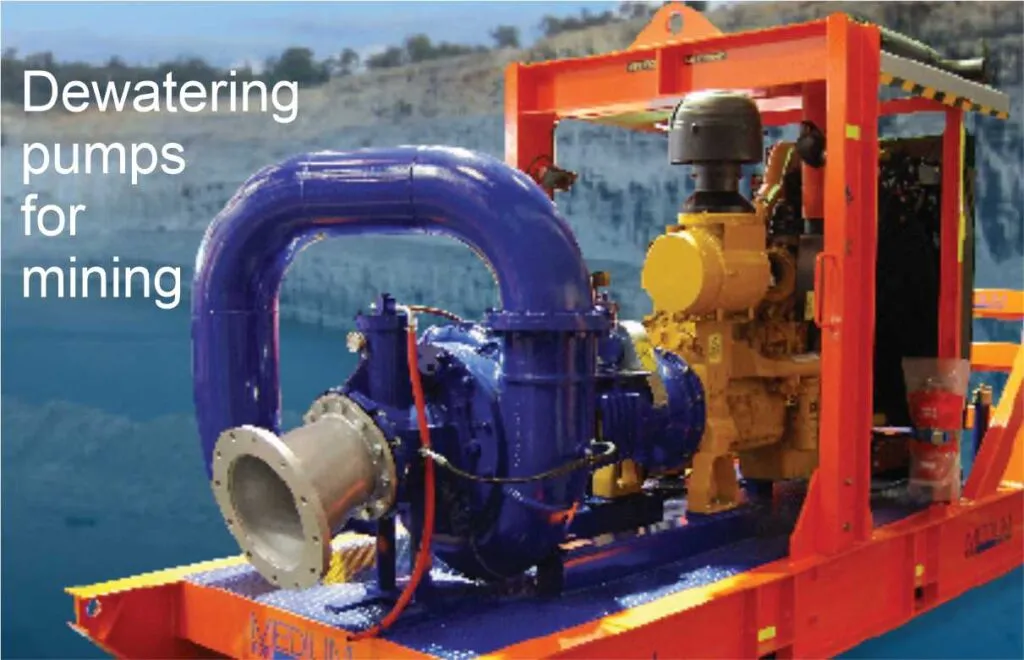
Dewatering keeps excavations dry, mines productive and basements safe — but only when the pump matches the site. These are the parameters that decide a dewatering pump selection.
Know your water
Clean seepage, silty runoff and slurry behave differently. Solids content and particle size dictate impeller type and material: a drainage pump on abrasive slurry will wear out in weeks, while a slurry pump on clean water wastes energy.
Head is more than depth
Total head combines static lift from the sump to discharge, friction losses through the delivery line, and any residual pressure needed at the outfall. Long, undersized discharge hoses quietly destroy pumping capacity.
Duty cycle and priming
Continuous inflow suits electric submersibles sitting in the sump; intermittent or moving duty often favours auto-prime diesel sets on the surface, which can run snore (dry-ish) without damage and move quickly between locations.
Practical checks before you order
- Expected inflow (m³/h) with a safety margin for monsoon conditions
- Static lift and delivery line length/diameter
- Solids: size, abrasiveness, fibrous content
- Power available on site — electric supply or diesel only
- Noise limits for urban or night working
Our team configures dewatering solutions for construction, mining, tunnelling and flood control across India. Tell us your inflow and lift, and we will size the right pump set for the job.
Related articles

Talk to an Engineer
Not Sure Which Product You Need?
Every application is different. Share your flow, head, application, fluid characteristics and project requirements with our engineering team. We will help you identify the right equipment for your application.